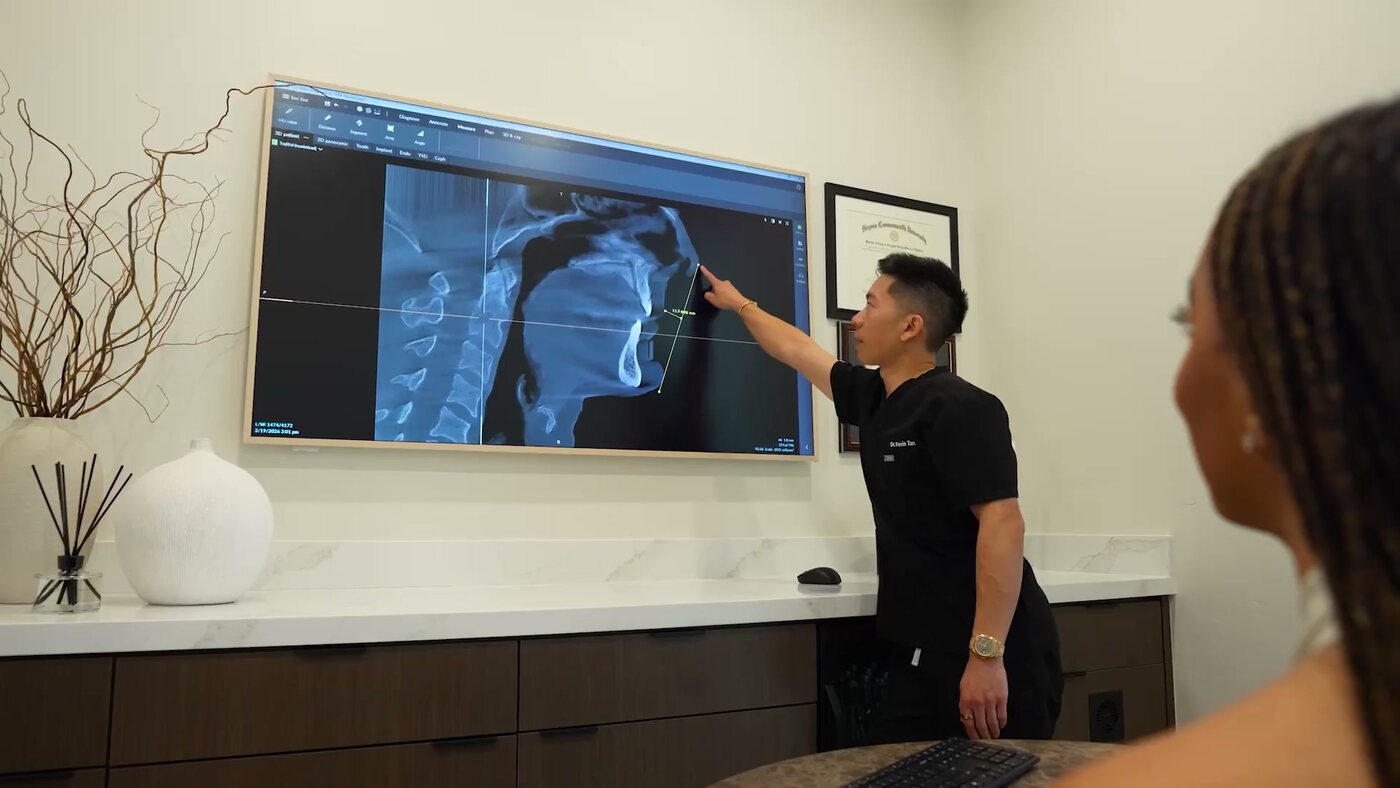
Smile design is not only about how teeth look. Here's how a comprehensive plan accounts for your bite, your joints, and your airway.
You invest in personal training, prioritize clean nutrition, and choose premium providers for every aspect of your healthcare. For many wellness-focused professionals, the smile is the last piece of a carefully curated health strategy to receive their attention. It's partly because dental care has always been framed as reactive — you go when something hurts, fix what's broken, and move on. But your teeth, jaw, and airway are connected to how you breathe, how you sleep, and how you recover, which means the smile isn't a cosmetic feature; it is a component of your complete health system.
Quick Takeaways
- Comprehensive smile design combines multiple treatments into one coordinated plan addressing both aesthetics and function.
- Treatment plans may include veneers, whitening, Invisalign, gum contouring, and airway-focused adjustments.
What Comprehensive Smile Design Actually Means
Comprehensive smile design isn't a single procedure. It's a coordinated treatment plan that addresses multiple concerns together. It is designed so that each element functions as an integrated whole rather than as a series of separate fixes made over time.
When treatments are planned in isolation, the results reflect that. A crown placed without considering the surrounding teeth. Whitening is done before veneers are matched. Cosmetic work layered on top of a bite that was never properly evaluated. Each decision might sound technically correct and still produce a result that feels assembled rather than intentional.
A complete smile design changes that by taking a step back. How does the smile look as a whole? How does the bite function? Are there any structural issues that must be addressed before cosmetic work begins? The answers to these questions form a sequential plan, with each phase supporting the next.
The Link Between Your Smile and Your Overall Health
Nobody talks about this enough in a dental chair, but your mouth is connected to the rest of your body in ways that actually matter for your long-term health.
- Chronic gum disease triggers an inflammatory response that doesn't stay local. Research has found that periodontal disease causes systemic inflammation that can affect cardiovascular health, among other systemic conditions. A Cochrane review of 30 clinical trials found that treating gum disease reduced blood sugar levels in diabetic patients, with measurable improvements sustained up to 12 months after treatment.
- Jaw structure and tooth alignment play a role too. A narrow dental arch or a bite that's out of balance can contribute to airway restriction, which affects sleep quality in ways that compound over time. Research said that people with poor sleep quality show significantly higher rates of reduced cognitive performance compared to good sleepers. Poor sleep has also been shown to diminish alertness and alter cortisol stress responses — none of which are minor concerns for someone who takes their health seriously.
- Even chewing mechanics matter. When teeth are worn, missing, or misaligned, the way you break down food changes, with downstream effects on digestion and nutrient absorption over time.
A comprehensive approach to smile care addresses these dimensions alongside the aesthetic ones. The goal isn't to create alarm around any single issue but to recognize that the mouth is part of a larger system, and treating it that way tends to produce better outcomes across the board.
Is Comprehensive Smile Design Right for You?
Not every smile concern calls for a comprehensive approach, but in some situations, it does. If you've been managing multiple issues separately, or quietly tolerating a smile that no longer reflects how you present yourself, a cohesive plan tends to produce a far more satisfying result.
Comprehensive smile design tends to be the right fit when:
- Years of wear, grinding, or aging have changed the shape, length, or proportion of multiple teeth
- Spacing, crowding, or misalignment affects both the appearance and function of your bite
- Discoloration, old restorations, and structural concerns exist together
- You want a single, well-considered plan rather than disconnected appointments
- You value precision and want to understand exactly what's being done and why
Notes from Form + Function Dental Aesthetics
Dr. Kevin's approach is shaped by something most dentists haven't experienced firsthand. As a former athlete, he spent years dealing with an airway issue that went undiagnosed because no one connected his teeth, his jaw, and his breathing. That's why airway function is part of how he evaluates every case, not as an add-on, but as a fundamental part of understanding how your smile works.
The practice itself reflects the same attention to detail. It's the small things that make our patients feel at home as much as possible. You can learn more about the philosophy on the values page or get an understanding of what to expect on the experience page .
Ready to See What's Possible?
When you're ready to explore what's possible for your smile, Dr. Kevin and the team are here to listen, answer your questions honestly, and help you understand your options at your own pace. Book a consultation online or call us at (702) 805-1117 .
A note on this article
This is general patient education, not a diagnosis or treatment recommendation. For advice about your own health, book a consultation or call us at (702) 805-1117.